Watercolor Asters Clipart, PNG: Elevating Your Designs with Hand-Painted Quality
In the world of digital design and creative crafting, the difference between a professional-grade project and an amateur attempt often comes down to the quality of the assets used. Watercolor Asters Clipart, PNG has become a staple for designers seeking that soft, organic touch that vector graphics simply cannot replicate. Whether you are designing wedding invitations, creating blog headers, or planning a scrapbooking layout, these hand-painted elements offer a level of texture and depth that resonates with audiences. However, finding the right set is only half the battle; understanding how to utilize high-resolution files effectively is where many creators stumble.
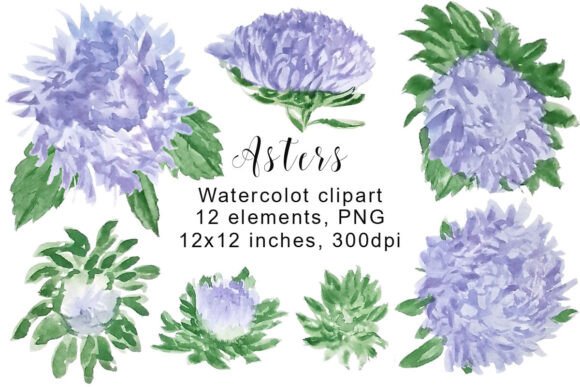
This collection of 12 hand-painted watercolor asters—featuring buds, stems, leaves, and full blooms—is designed to be more than just a decorative add-on. It is a foundational element for branding, stationery, and print media. Yet, without proper knowledge of file specifications and application techniques, even the most beautiful clip art can end up looking pixelated, muddy, or out of place. Let’s explore what makes this specific type of asset valuable and how to avoid common pitfalls that undermine your creative vision.
Understanding the Value of High-Resolution Watercolor Assets
When you search for Watercolor Asters Clipart, PNG, you are likely looking for something that bridges the gap between digital convenience and traditional artistry. Unlike flat illustrations, hand-painted watercolors carry subtle gradients, bleed effects, and paper textures that mimic real brushstrokes. The specific set described here offers 12 distinct RGB PNG files, each sized at approximately 3600 x 3600 pixels (12x12 inches) at 300 DPI. These specifications are critical because they ensure the images remain crisp when printed on physical media like invitation cards or fabric.
The versatility of these elements extends far beyond simple decoration. Because the files come as separate images with transparent backgrounds, you have the freedom to layer them, resize them, and combine them with other design elements without worrying about awkward white boxes or low-resolution scaling issues. This flexibility is essential for entrepreneurs and small business owners who need to maintain brand consistency across various platforms, from Instagram posts to large-format posters.
Common Mistakes When Selecting and Using Digital Clip Art
Despite the abundance of resources available online, many designers make avoidable errors when integrating watercolor elements into their work. One of the most frequent mistakes is ignoring the resolution requirements of the final output. Beginners often download a lower-quality version of an aster clipart set because it loads faster or is free, only to discover later that the image looks blurry when printed on a wedding invitation. If your goal is physical printing, anything less than 300 DPI will result in jagged edges and loss of detail, making your project look unprofessional.
Another oversight involves color management. Watercolor art relies heavily on subtle shifts in tone and saturation. When working with RGB PNG files intended for web use, colors may appear vibrant on a screen but shift significantly when converted to CMYK for print. Without checking how the specific hues of the asters translate to your printer, you might find that the delicate purples and blues turn out dull or muddy. This disconnect can ruin the aesthetic balance of a carefully curated design.
Furthermore, many users fail to consider the context in which the clip art is placed. Placing a highly detailed, textured watercolor flower against a busy background pattern can create visual clutter. The beauty of hand-painted elements lies in their ability to breathe; they need negative space to showcase their organic nature. Overcrowding a design with too many stems, leaves, and buds can overwhelm the viewer and dilute the message of your greeting card or blog post.
How Poor Choices Impact Your Final Project
The consequences of using low-quality or mismatched assets go beyond aesthetics. In the realm of client work, such as designing logos or announcement cards, poor image quality directly impacts your reputation. A pixelated flower on a wedding invitation suggests a lack of attention to detail, which can erode trust before the event even begins. For bloggers and marketers, using compressed or low-res images can slow down website loading times, negatively affecting SEO rankings and user experience.
Additionally, using files with incorrect dimensions can lead to wasted materials and money. If you are printing on custom stationery or fabric, resizing a low-resolution image to fit a larger format will result in a ruined print run. The cost of reprinting often far exceeds the price of investing in a high-quality clip art pack initially. Similarly, attempting to edit a rasterized watercolor image without understanding its structure can lead to artifacts and distortion, rendering the file unusable for future projects.
Practical Steps to Ensure Professional Results
To get the most out of Watercolor Asters Clipart, PNG, start by verifying the technical specifications before downloading. Always confirm that the files are provided at 300 DPI and in a size that accommodates your largest intended use. For the set mentioned earlier, the 3600 x 3600 pixel dimension is ideal for both digital overlays and standard print sizes. Check the file properties in your image editing software to ensure the resolution matches the seller's description.
Next, test your color palette early in the process. If you plan to print your designs, create a small proof to see how the RGB colors of the asters convert to CMYK. Adjust the saturation or brightness in your design software if necessary to compensate for potential shifts. This step ensures that the final product matches your vision.
Finally, focus on composition. Treat each element of the clip art pack as a modular piece. Use the buds and stems to create leading lines that guide the eye, and place the full flowers as focal points. Remember that less is often more; a single, well-placed watercolor aster can convey elegance more effectively than a cluster of competing elements. By respecting the artistic integrity of the hand-painted style, you can create designs that feel authentic and sophisticated.
What to Check Before You Buy or Download
Before committing to any digital asset, take a moment to evaluate its suitability for your specific needs. Ask yourself: Is the resolution high enough for my intended medium? Are the backgrounds truly transparent, or are there hidden white borders? Does the style of the watercolor match the overall theme of my project?
- File Format: Ensure you are receiving PNG files with transparency, not JPEGs, which often include white backgrounds.
- Licensing: Verify the usage rights. Some packs are for personal use only, while others allow commercial applications like selling printed goods.
- Variety: Look for sets that include different stages of the flower, such as buds and open blooms, to give you more creative control.
- Consistency: Check that all elements in the pack share the same brush style and color palette to maintain visual cohesion.
By taking these precautions, you ensure that your investment in Watercolor Asters Clipart, PNG yields high-quality results that enhance your brand and delight your audience. Whether you are a seasoned graphic designer or a DIY enthusiast, the right tools and a mindful approach will always elevate your creative output.