Photographer Silhouettes Vectors: A Practical Guide to Usage, Formats, and Design Choices
In the realm of visual communication, the photographer silhouette vector has emerged as a versatile asset for designers, marketers, and content creators. Unlike standard stock photography or complex illustrations, these simplified graphic representations offer a distinct aesthetic that balances recognition with artistic abstraction. For professionals aged 20 to 50 who are evaluating design resources, understanding the specific utility, format requirements, and comparative advantages of photographer silhouettes vectors is essential for making informed creative decisions.
Defining the Asset: What Makes Photographer Silhouettes Distinct?
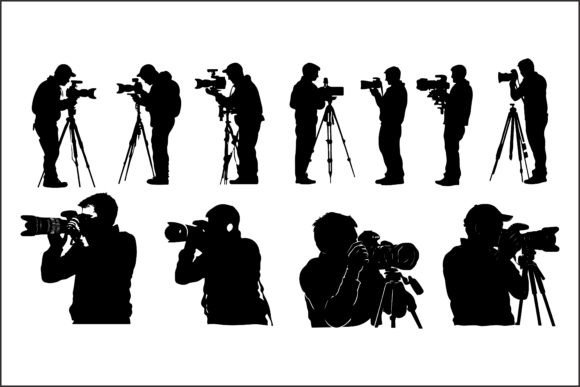
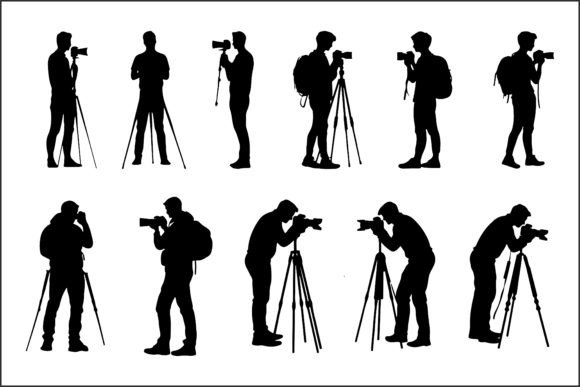
A photographer silhouette vector is a scalable digital image depicting a figure holding a camera, rendered primarily in solid color against a contrasting background. The defining characteristic of this style is the reduction of detail; facial features, clothing textures, and environmental nuances are removed in favor of shape and posture. This approach aligns with broader trends in minimalist design and visual storytelling, where the essence of an action conveys more meaning than literal representation.
The distinction lies in the balance between simplicity and specificity. While a generic human icon might represent "people," a photographer silhouette immediately signals themes of creative photography, photo composition, and the act of capturing moments. This makes it particularly effective for contexts requiring immediate thematic recognition without the distraction of photorealistic details. Whether used to represent a camera lover or the concept of outdoor photography, the silhouette serves as a universal symbol that transcends language barriers.
Evaluating File Formats: EPS, JPG, and PNG Considerations
When sourcing these assets, the choice of file format significantly impacts their utility across different media. Understanding the tradeoffs between EPS FILE, JPG FILE, and PNG FILE formats is critical for ensuring high-quality output.
- EPS (Encapsulated PostScript): This is the native vector format. It is the superior choice for print production, such as large-format posters, brochures, or merchandise like t-shirts and tote bags. Because EPS files are mathematically defined rather than pixel-based, they can be scaled infinitely without loss of resolution. For projects involving branding or promotional materials that require precise scaling, EPS is the industry standard.
- PNG (Portable Network Graphics): Ideal for web design and social media graphics, PNG files support transparency. This allows designers to overlay the silhouette onto various backgrounds without a white box artifact. For creating engaging posts on Instagram or Facebook, or using the image as an icon on a photography blog, PNG offers the best balance of quality and compatibility.
- JPG (Joint Photographic Experts Group): While widely supported, JPG is generally less suitable for silhouettes unless the design requires a specific photographic background. JPG uses lossy compression, which can introduce artifacts around sharp edges. However, for quick previews or low-resolution email signatures, it remains a viable option.
Decision-makers should prioritize EPS for print-heavy workflows and PNG for digital applications, reserving JPG for scenarios where file size is a primary constraint over edge quality.
Comparative Analysis: Silhouettes vs. Alternatives
While photographer silhouettes vectors are powerful, they are not a one-size-fits-all solution. Comparing them to other visual styles helps clarify when they are the right tool for the job.
Silhouettes vs. Photorealistic Stock Images
Stock photos provide realism and emotional depth through facial expressions and environmental context. However, they can clutter a design and may require expensive licensing fees for commercial use. In contrast, photographer silhouettes vectors offer a clean, stylized look that integrates seamlessly into graphic layouts. If the goal is to convey a concept—such as modern photography or photography concepts—rather than document a specific event, the silhouette is often more effective. It avoids the dated feel of generic stock photos and aligns better with contemporary photography trends 2025.
Silhouettes vs. Line Art and Icons
Line art and flat icons are also popular for simplifying visuals. Line art relies on outlines, which can appear fragile at small sizes or against busy backgrounds. Silhouettes, being filled shapes, tend to have higher visual weight and legibility. For instance, on a business card or a photo album cover, a solid silhouette commands more attention than a thin line drawing. Conversely, if the design requires a delicate, technical feel, line art might be preferable. The choice depends on the desired visual hierarchy and the complexity of the background elements.
Strategic Applications Across Industries
The versatility of these vectors allows them to function effectively across ten key areas, each presenting unique considerations for implementation.
Graphic Design and Print Media
For graphic design projects like posters, flyers, and brochures, silhouettes serve as focal points. They enhance the layout by breaking up text-heavy sections with strong visual anchors. When designing print products such as invitations or business cards, the scalability of vector formats ensures crisp lines even on small paper sizes. This is particularly valuable for photographers launching workshops or events, where professional presentation is paramount.
Digital Presence and Social Media
In the digital sphere, social media graphics benefit from the clean aesthetics of silhouettes. Platforms like Instagram and Twitter rely on imagery that stands out in a crowded feed. Using a man taking picture silhouette as part of a carousel post or a profile header can instantly communicate the account's niche. Similarly, in web design, these vectors function well as background elements or navigation icons, maintaining site performance while adding thematic consistency.
Education and Branding
Educational materials such as online courses or articles about photography techniques often require illustrative aids. Silhouettes simplify complex concepts, allowing readers to focus on the instructional content rather than getting distracted by detailed imagery. Furthermore, for branding purposes, integrating a custom silhouette into a logo can create a memorable identity for photography-related businesses. It suggests a focus on the craft itself, appealing to enthusiasts and professionals alike.
Miscellaneous Uses
Beyond standard media, these vectors find utility in merchandise printing. T-shirts, mugs, and tote bags featuring artistic silhouettes appeal to the camera lover demographic. Additionally, they are effective in presentations, helping to illustrate slideshows or pitch decks related to visual arts. In digital art, they can be combined with other elements to create collages or illustrations that explore visual storytelling in a modern context.
Decision Factors: When to Choose or Avoid
Choosing photographer silhouettes vectors requires a clear understanding of project goals. These assets are the right choice when:
- Scalability is required: You need an image that must be resized frequently for different mediums without quality loss.
- Minimalism is preferred: The design aesthetic calls for clean lines and reduced visual noise.
- Conceptual representation is needed: The goal is to symbolize the act of photography rather than depict a specific person.
- Cost efficiency matters: Vector assets often come with broader licensing terms compared to high-end stock photography.
Conversely, alternative options may be more appropriate when:
- Emotional nuance is critical: If the campaign relies on specific facial expressions or mood lighting, a photograph is superior.
- Contextual detail is necessary: Projects requiring specific gear models, environments, or cultural markers may need more detailed illustrations.
- Brand guidelines dictate realism: Some corporate identities strictly prohibit abstract or stylized representations.
Conclusion on Utility and Versatility
Photographer silhouettes vectors occupy a unique space in the designer's toolkit, bridging the gap between functional iconography and artistic expression. By offering flexibility in formats like EPS, JPG, and PNG, they accommodate both print and digital workflows. While they may not replace the emotional impact of photography or the precision of technical line art, their ability to convey the essence of camera art and creative photography makes them indispensable for many projects.
For adults navigating the landscape of design resources, the decision to use these vectors should be driven by the specific needs of the project. Whether enhancing a brochure, creating a social media post, or branding a new venture, the silhouette offers a stylish, adaptable solution that supports clear communication and professional aesthetics. By weighing the strengths and limitations outlined above, creators can confidently integrate these assets into their work, ensuring that every visual element serves a purpose.