The Affection Tree and Tree of Love: Versatile Vector Assets for Modern Design
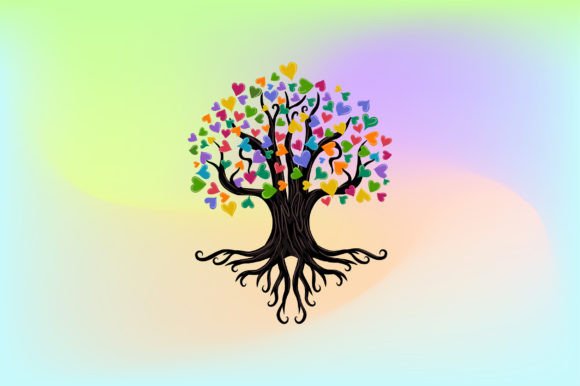
In the realm of digital creativity, few symbols resonate as universally as the concept of a tree representing growth, connection, and deep emotional bonds. The Affection Tree and Tree of Love have emerged as powerful visual metaphors in contemporary graphic design, transcending simple botanical illustration to become central elements in storytelling, branding, and personal expression. For designers, educators, and hobbyists alike, accessing high-quality representations of these concepts is essential for creating impactful work. This article explores the utility, technical advantages, and diverse applications of vector illustrations centered around the Affection Tree and Tree of Love, providing a comprehensive guide for professionals and enthusiasts looking to elevate their creative projects.
The Symbolic Power of Botanical Metaphors in Visual Communication
Before diving into the technical specifications of digital files, it is crucial to understand why the Tree of Love remains such a potent symbol across cultures and industries. Trees naturally evoke feelings of stability, longevity, and interconnectedness. When stylized as an Affection Tree, these visuals often incorporate hearts, intertwined branches, or blooming flowers that signify relationships, family heritage, or romantic devotion. This symbolism makes them incredibly versatile for various contexts, from wedding invitations to corporate social responsibility campaigns focused on community building.
For researchers and educators, the imagery serves as an excellent tool for explaining complex emotional or biological concepts. In psychology, the tree metaphor is frequently used to discuss family systems therapy, where roots represent history and branches represent future potential. A well-crafted Affection Tree illustration can visually anchor these abstract theories, making them more accessible to students and clients. Similarly, in marketing, brands use these motifs to humanize their message, suggesting that their products or services are rooted in care and genuine connection rather than mere transactional value.
Why Vector Format is Essential for Professional Execution
The medium through which these images are delivered is just as important as the subject matter itself. While raster images (like standard JPEGs) are common on the web, they lack the flexibility required for professional print and large-scale applications. This is where the specific advantage of vector files becomes undeniable. Unlike pixel-based graphics, vector illustrations are defined by mathematical equations, allowing them to be scaled infinitely without any loss of resolution or clarity.
When working with an Affection Tree design intended for a massive billboard or a tiny mobile app icon, the ability to resize the artwork without blurring or pixelation is critical. High-quality vector templates ensure that every leaf, branch, and heart retains its crisp edges regardless of the output size. This scalability is a cornerstone of professional workflow efficiency, saving designers hours of time that would otherwise be spent redrawing assets or dealing with low-resolution errors during the printing process.
Technical Specifications and File Compatibility
A robust collection of Tree of Love assets must cater to the diverse software ecosystems used by modern creators. The most valuable downloads include a suite of file formats, each serving a specific purpose within the design pipeline. Understanding the utility of each format empowers users to select the right tool for the job, ensuring seamless integration into their projects.
- EPS10 Files: Encapsulated PostScript (EPS) files are the industry standard for professional vector editing. These files are fully editable in software like Adobe Illustrator, CorelDRAW, and Inkscape. They allow designers to modify individual paths, change colors, and adjust line weights of the Affection Tree components. This level of control is vital for customizing the design to match specific brand guidelines or artistic visions.
- SVG Files: Scalable Vector Graphics (SVG) are the native language of the web. For web developers and UI/UX designers, SVGs offer the perfect balance of quality and performance. They can be embedded directly into HTML code, styled with CSS, and animated using JavaScript. An Affection Tree in SVG format ensures that websites load quickly while displaying sharp, crisp graphics on all devices, from high-density retina screens to standard monitors.
- PNG Files: Portable Network Graphics (PNG) provide a transparent background option, making them ideal for compositing. If a designer needs to place a Tree of Love over a complex photograph or a gradient background without a white box interfering, PNGs are the solution. They retain high resolution for screen use and are widely supported across all operating systems and browsers.
- JPG Files: Joint Photographic Experts Group (JPG) files are best suited for quick previews, email attachments, or situations where file size is a primary constraint. While they do not support transparency or infinite scaling, they offer excellent compatibility for sharing proofs with clients or embedding in documents where vector data is unnecessary.
This multi-format approach ensures that whether you are a print shop operator needing an EPS for a die-cut stamp or a blogger needing a PNG for a sidebar graphic, the Affection Tree assets are ready for immediate use.
Practical Applications Across Industries
The versatility of these vector illustrations extends far beyond simple decoration. They serve as functional elements in a wide array of industries, offering practical solutions for communication and branding challenges.
Wedding and Event Planning
In the wedding industry, the Tree of Love is a staple motif. Couples often use these designs for save-the-date cards, seating charts, and cake toppers. The ability to edit the vector files allows planners to customize the number of "branches" to represent different family units or add names to specific leaves. For DIY crafters, these files can be sent to cutting machines like Cricut or Silhouette to create intricate paper cutouts, laser-engraved wooden signs, or vinyl decals for mason jars. The precision of the vector lines ensures clean cuts, resulting in a polished, professional finish for handmade gifts.
Apparel and Merchandise Design
For business owners and independent artists, t-shirt designs and merchandise are significant revenue streams. The Affection Tree works exceptionally well on fabric because the organic shapes translate beautifully onto curved surfaces. Designers can manipulate the color palette of the vector file to match seasonal trends or team colors. Because the files are openable and resizable, a single asset can be adapted for everything from a small embroidered patch on a cap to a full-back print on a hoodie. The durability of vector-based prints also means the design will withstand repeated washing without fading or cracking, a key consideration for commercial apparel.
Digital Marketing and Branding
In the digital space, logos and icons play a pivotal role in brand recognition. A stylized Tree of Love can serve as a unique logo for non-profits, counseling centers, or family-oriented businesses. The clean lines of vector art ensure legibility even at small sizes, such as a favicon in a browser tab or an app icon on a smartphone home screen. Furthermore, these assets can be animated. Using SVG code, motion designers can create subtle animations where leaves sway or hearts pulse, adding a layer of interactivity that static images cannot achieve. This dynamic capability enhances user engagement on websites and social media platforms.
Educational and Therapeutic Tools
Educators and therapists utilize visual aids to facilitate learning and healing. An Affection Tree worksheet, created from these vector templates, can help children map out their family structures or express emotions through coloring activities. The high-quality nature of the files ensures that when printed on educational materials, the details remain clear and engaging. Researchers might also use these illustrations in presentations to visualize data regarding social networks or community growth, leveraging the intuitive understanding people have of tree structures to explain complex relational dynamics.
Workflow Integration for Creators
Integrating high-quality vector assets into a creative workflow requires a strategic approach to maximize efficiency and creativity. For professionals, the ability to download a set containing JPG, EPS10, PNG, and SVG files streamlines the production process. Instead of converting formats or searching for multiple sources, a single download provides the necessary tools for every stage of the project lifecycle.
Consider a scenario where a graphic designer is working on a rebranding project for a family foundation. They start by opening the EPS10 file in Adobe Illustrator to adjust the branch thickness and color scheme to align with the client's new identity. Once the core design is finalized, they export a high-resolution PNG for the website hero banner and an SVG for the interactive mobile application. Simultaneously, they send the JPG version to the marketing team for social media scheduling. This seamless transition between formats eliminates bottlenecks and ensures consistency across all touchpoints.
For hobbyists and DIY enthusiasts, the workflow is equally simplified. A crafter planning a Valentine's Day workshop can download the Tree of Love vectors, import them into their cutting machine software, and immediately begin producing physical crafts. The "openable" nature of the files means they are not locked down; users can extract specific elements, such as a single heart or a cluster of leaves, to mix and match with other designs. This modularity encourages experimentation and fosters a deeper sense of ownership over the final product.
Design Considerations and Best Practices
While the availability of these assets simplifies the creation process, thoughtful application is key to achieving a professional result. When utilizing an Affection Tree or Tree of Love illustration, designers should consider the context in which the image will appear. Color theory plays a significant role; warm tones like reds and oranges may convey passion and energy, suitable for romantic themes, while cooler greens and blues might suggest growth, peace, and stability, fitting for therapeutic or environmental contexts.
Additionally, the complexity of the design should match the intended medium. Intricate details in a vector file look stunning on a large poster but may get lost when shrunk down for a business card. Designers should take advantage of the editable nature of the files to simplify the artwork for smaller applications, perhaps removing fine textures or reducing the number of overlapping elements. Conversely, for large-format prints, the high resolution of the vector source allows for the inclusion of detailed textures that add depth and richness to the final piece.
Accessibility is another crucial consideration. When using these illustrations on the web, especially in SVG format, it is good practice to include descriptive alt text that explains the visual content for screen readers. Describing the Affection Tree not just as an image but as a symbol of connection helps ensure that the content is inclusive and reachable by all users.
Conclusion on Creative Potential
The Affection Tree and Tree of Love vector illustrations represent more than just decorative elements; they are foundational tools for effective visual communication. Their symbolic resonance combined with the technical superiority of vector formats makes them indispensable for a wide range of users. From the professional graphic designer crafting a corporate identity to the hobbyist creating personalized gifts, these high-quality files offer the flexibility, scalability, and aesthetic appeal needed to bring ideas to life. By understanding the capabilities of EPS, SVG, PNG, and JPG formats, creators can optimize their workflows and produce work that is both technically sound and emotionally impactful. As the demand for authentic, meaningful design continues to grow, the versatility of these botanical metaphors ensures they will remain a staple in the creative toolkit for years to come.